AdGuard Home v1.0 beta: A major leap forward
Your smart TV is trying to track your viewing habits, your mobile games are chatting with data brokers, and even your smart fridge might be up to something fishy. For years, AdGuard Home has been the ultimate, silent shield against all of this — a free, open-source gift to the community designed to put network control in your hands.
But let’s be honest: lately, that shield has been a bit too silent. It looked like the project was just getting routine updates. We are finally breaking that pattern. We are launching the beta version of AdGuard Home v1.0, shifting the project from quiet maintenance into active development.
The key takeaways
We’ve redesigned AdGuard Home to look cleaner and more modern, aligning it with other AdGuard products while keeping the core layout familiar so you won’t get lost.
Future updates will regularly introduce new tools and features, rather than just routine fixes and library updates.
Since this is a significant change, we invite you to test this version in your environment and provide feedback to help us stabilize the final release.
To understand why it took eight years to reach this milestone, we need to go back to the beginning.
A quick look back: The 8-year journey to v1.0
AdGuard Home first saw the light of day in 2018 as a v0.1 preview. To be completely transparent, the original user interface was built by someone who was literally learning React while coding it. It wasn’t perfect, but it worked, and it helped the product grow into something people could rely on.
Our versioning was just as experimental. Instead of a logical v0.2, we skipped straight to v0.9, which was immediately followed by... v0.91. Despite the erratic numbers, the project was thriving. We kept adding major features like the built-in updater, client tags, and pioneering DNS-over-QUIC support. By 2020, we adopted semantic versioning for community stability, counting all the way to v0.100 and eventually v0.107.
But a true “v1.0” always felt like more than just the next number. As the project grew, the legacy interface became harder to evolve, making it increasingly difficult to introduce major changes without disrupting existing setups. Over time, the v0.107 branch settled into a long series of careful patches and incremental improvements.
Version 1.0 breaks that cycle. We are adopting a flexible versioning scheme similar to other AdGuard products, meaning minor releases (like v1.0.0 to v1.1.0) may include backwards-incompatible changes. Lifting these restrictions allows us to ship new features much faster — starting with a refreshed interface.
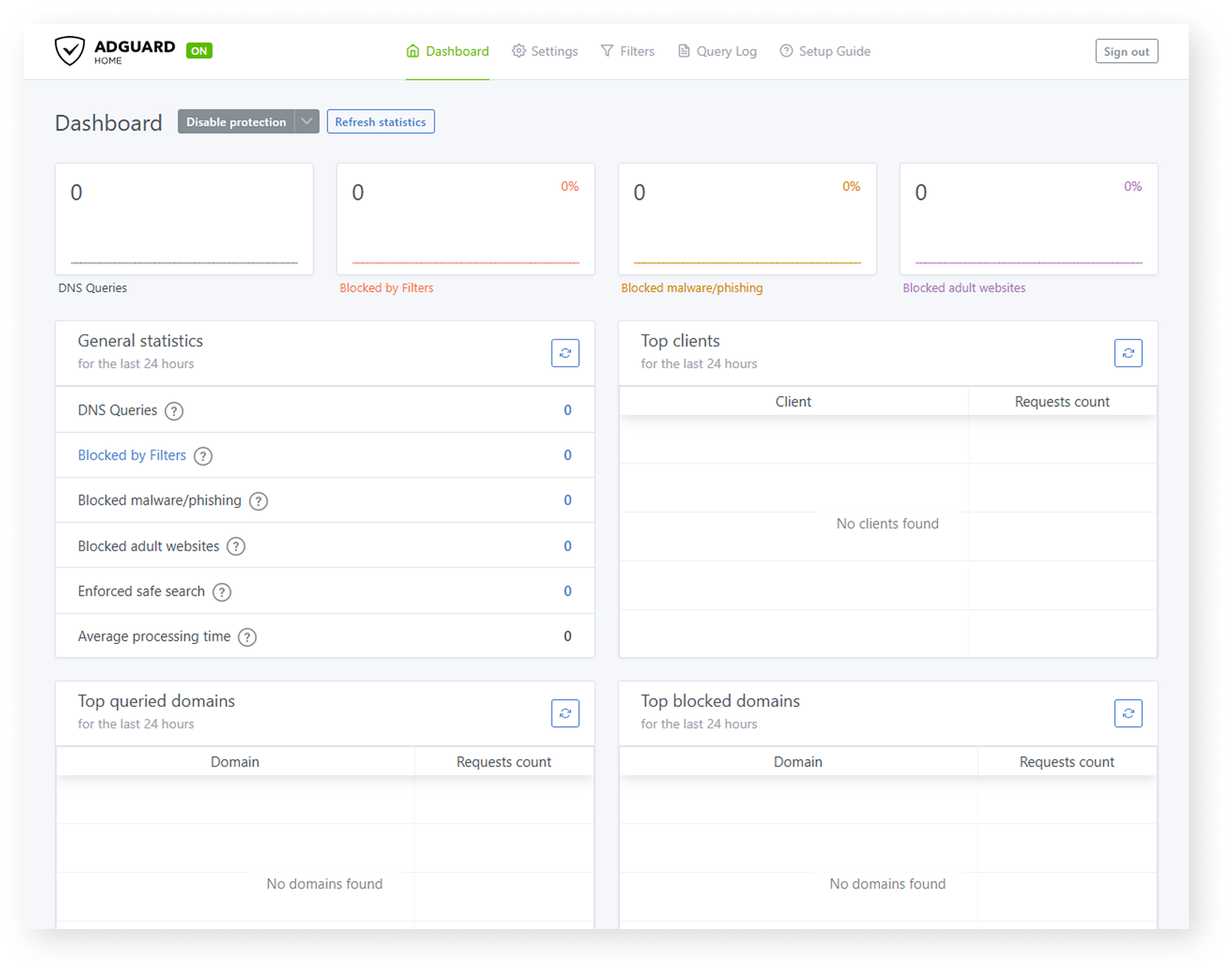
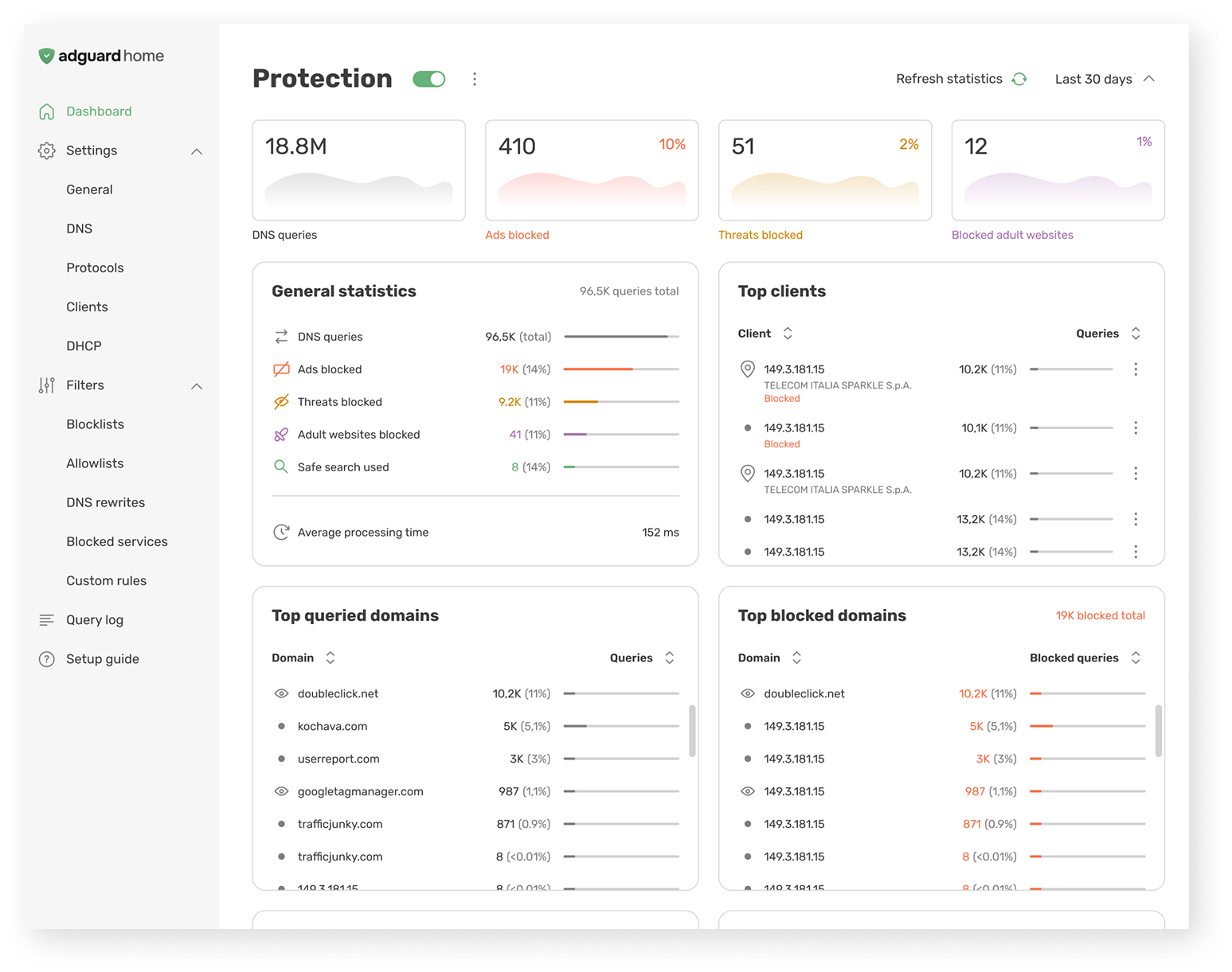
Old vs new dashboard
A refreshed interface that feels familiar
We know how frustrating it is when a service you use every day suddenly updates its design and forces you to relearn where every single button is. We didn’t want to do that to you. We tried to update it so you wouldn’t get lost, preserving the familiar logic while making everything look clean, modern, and aligned with the rest of the AdGuard ecosystem. Plus, you can expect a few useful novelties.
But this overhaul goes deeper than looks. The new frontend shares the backend’s strict optimization philosophy. Rebuilt with fine-grained reactivity, it is now significantly lighter and faster. This update resolves previous memory consumption issues, making AdGuard Home run smoothly on low-power devices, and introduces a fully responsive mobile UI.
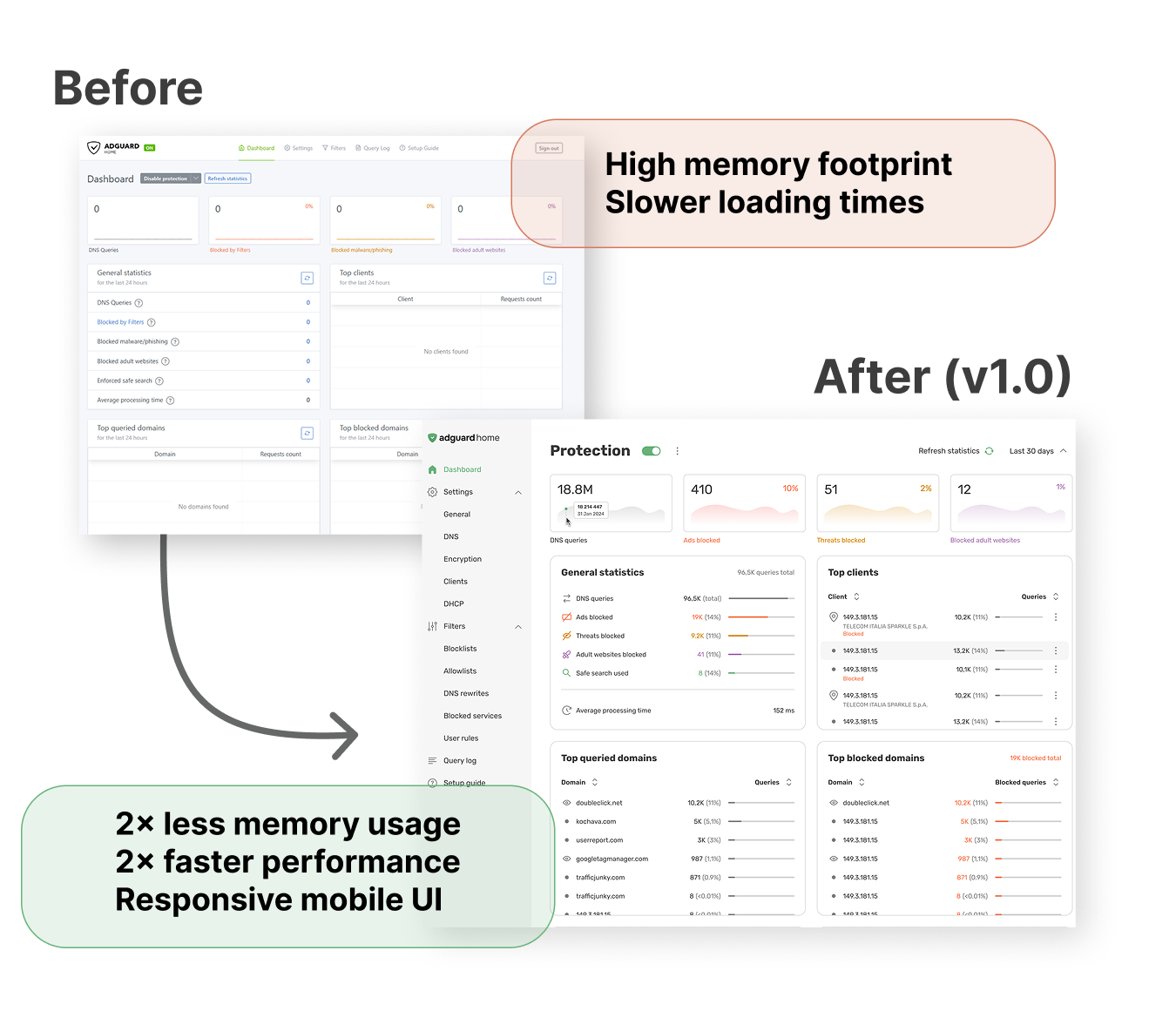
Installation wizard and setup guide
The new onboarding process minimizes friction during deployment, making the initial configuration of your DNS server straightforward and welcoming for new users.
The updated setup guide will also help you configure your devices easily.
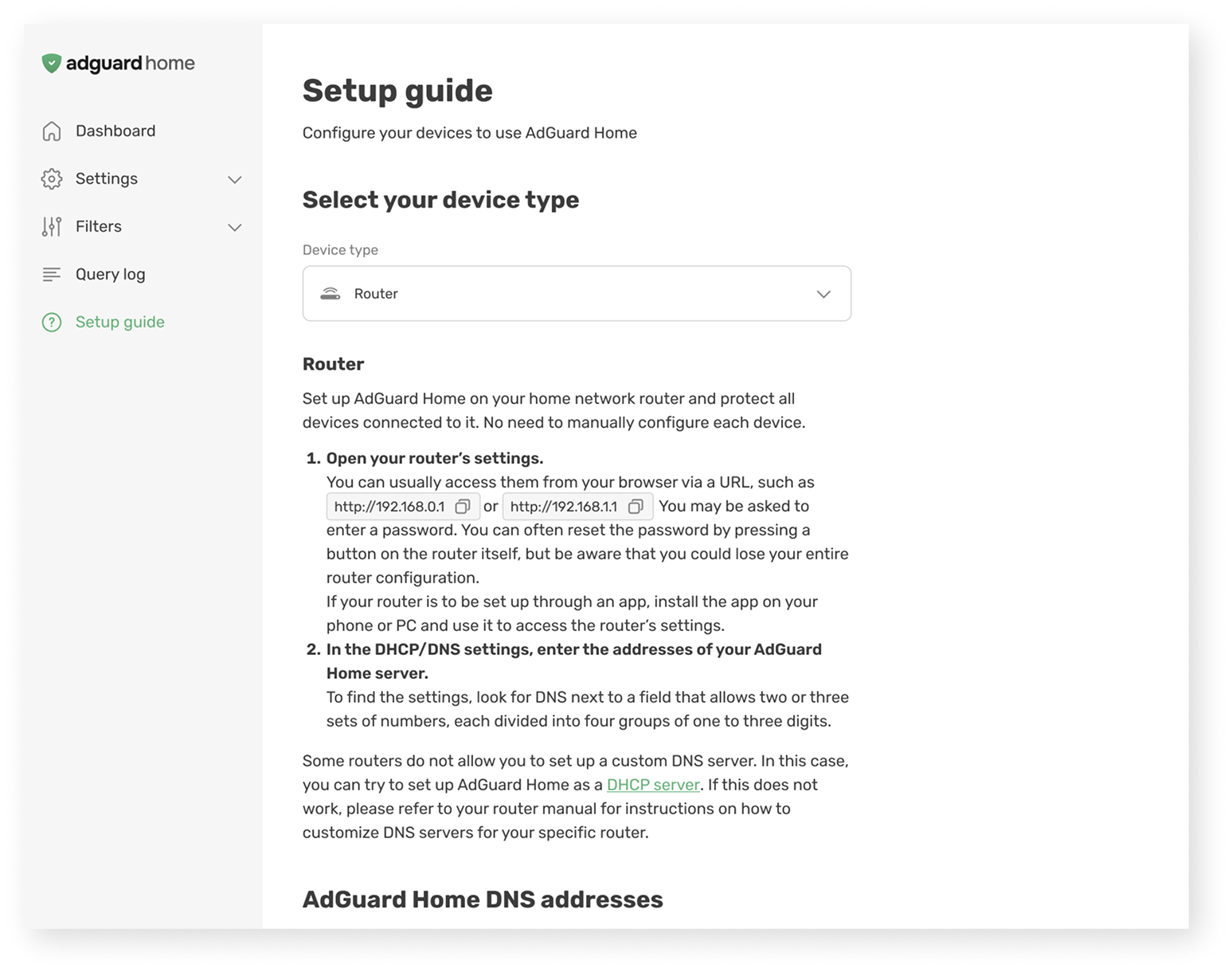
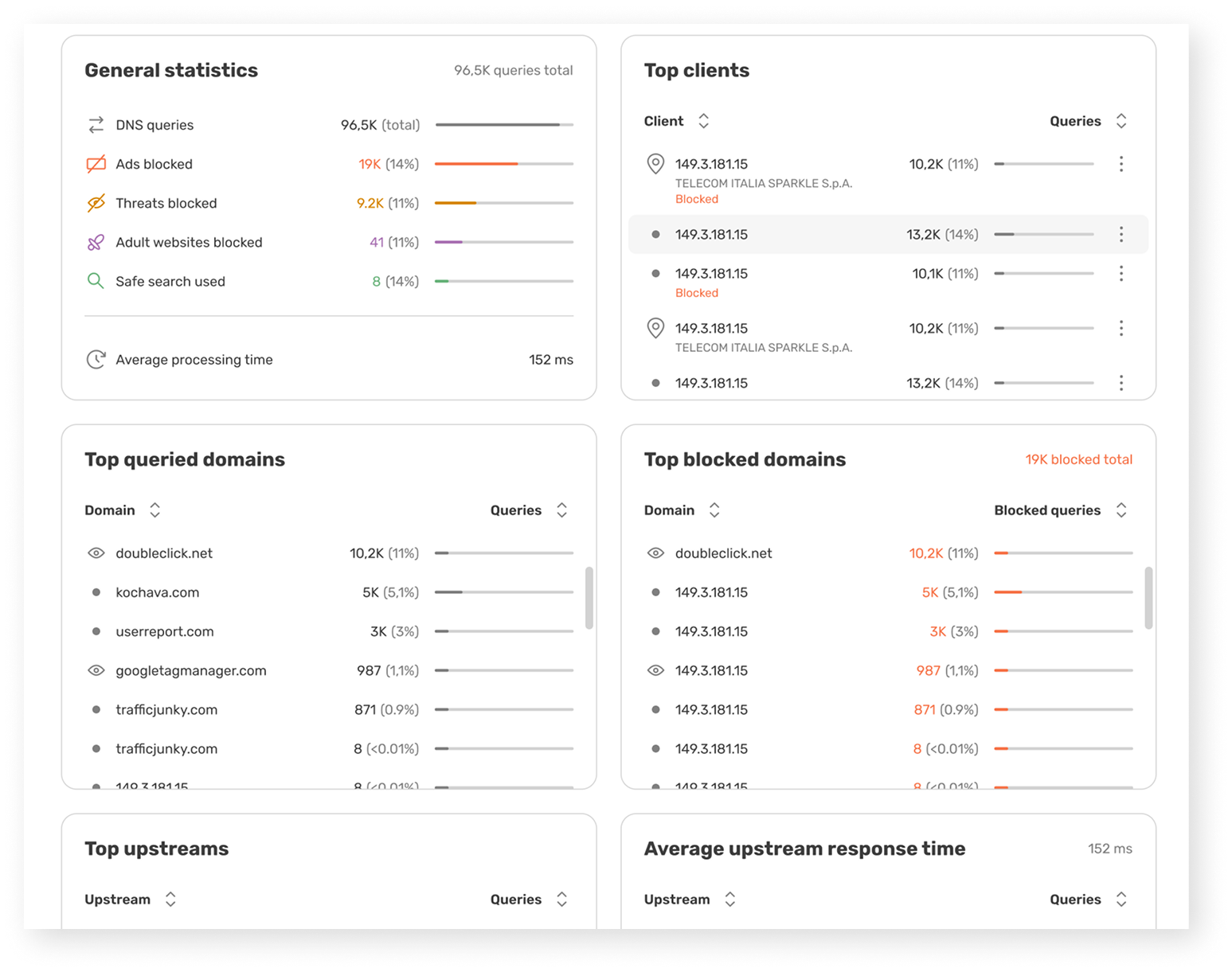
Dashboard
Monitoring your network statistics and server status is more straightforward, with a streamlined layout that allows you to review key metrics at a glance.
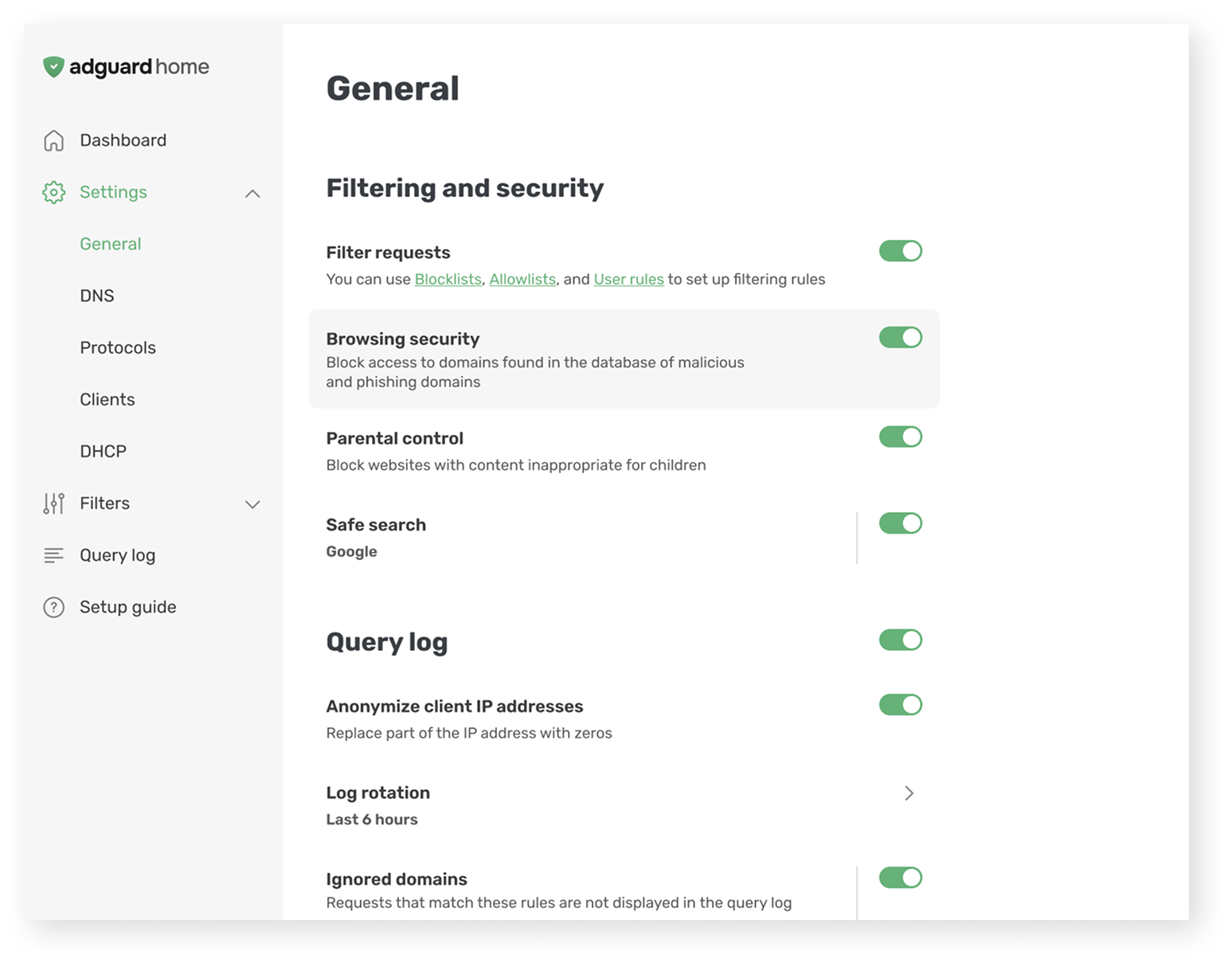
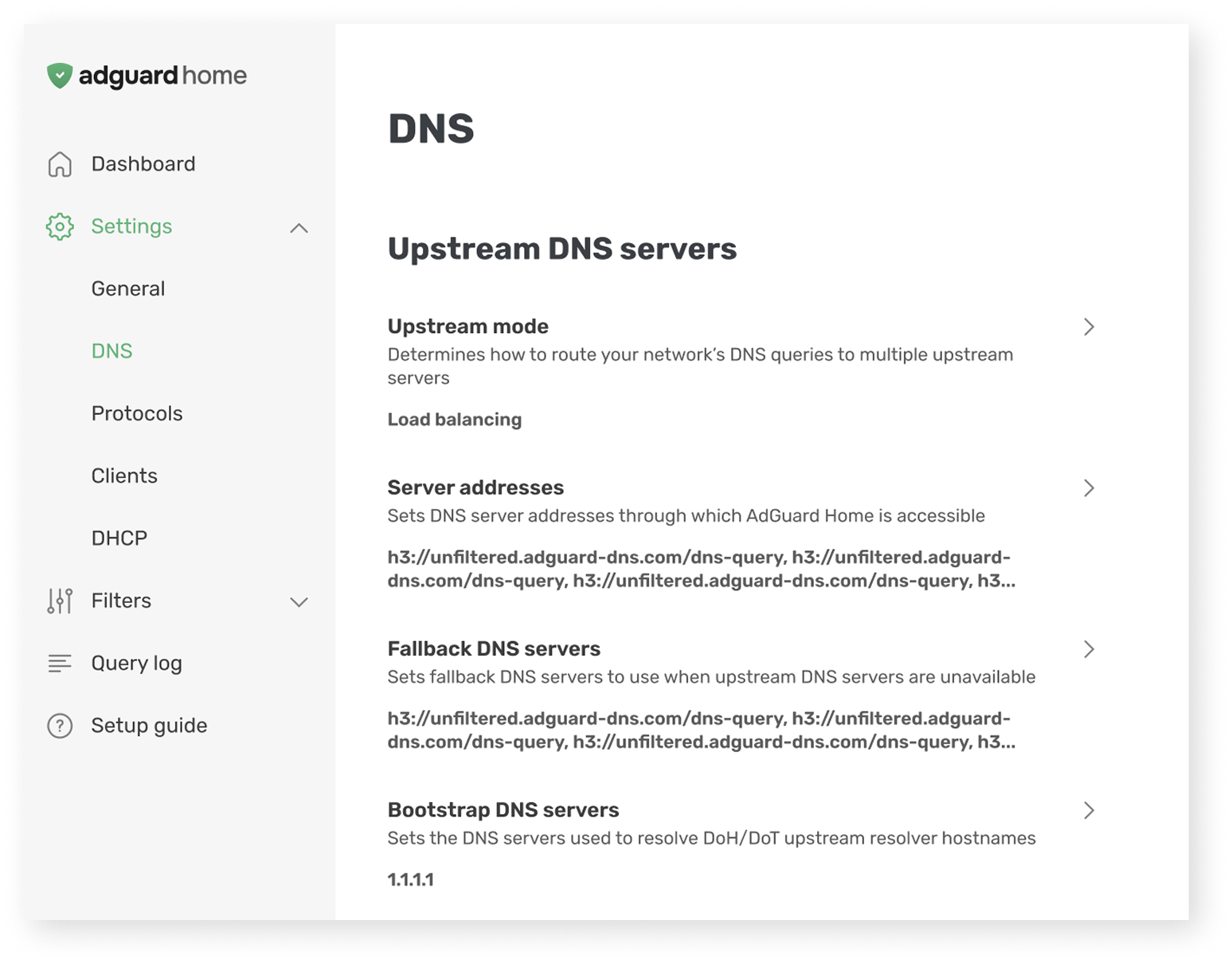
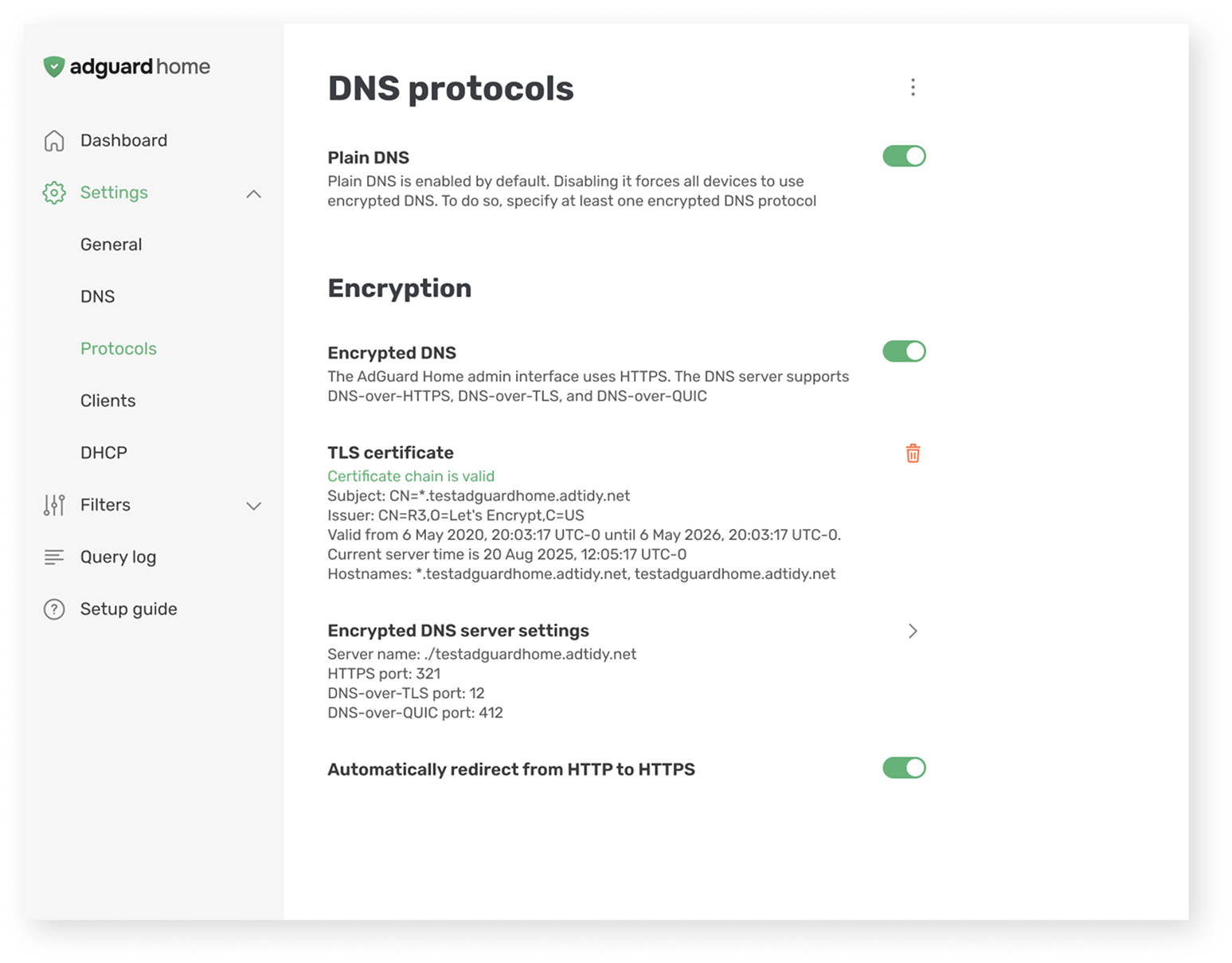
Core settings
Fine-tuning your server is now easier thanks to a logical structural cleanup covering general options, DNS, and DHCP configurations.
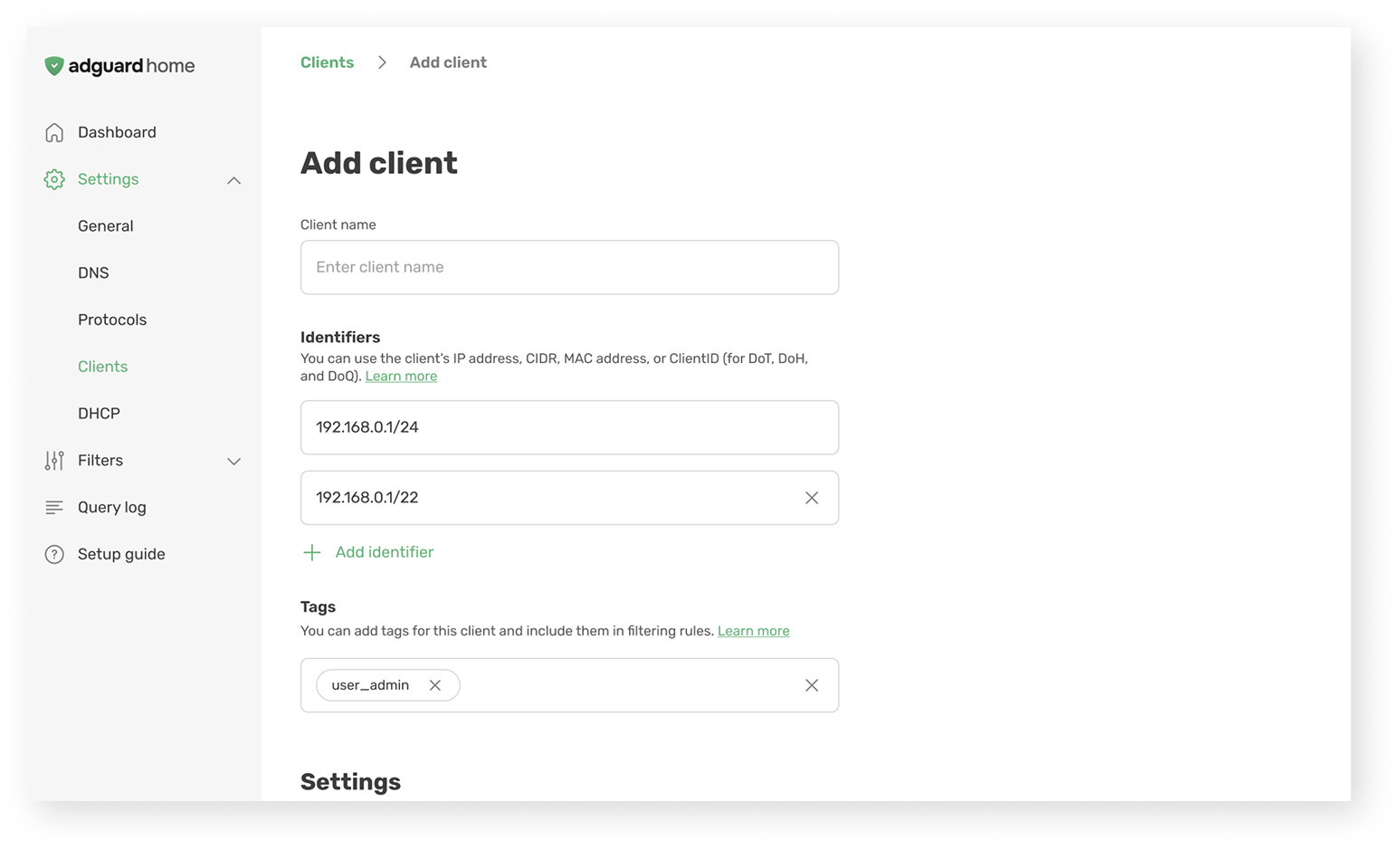
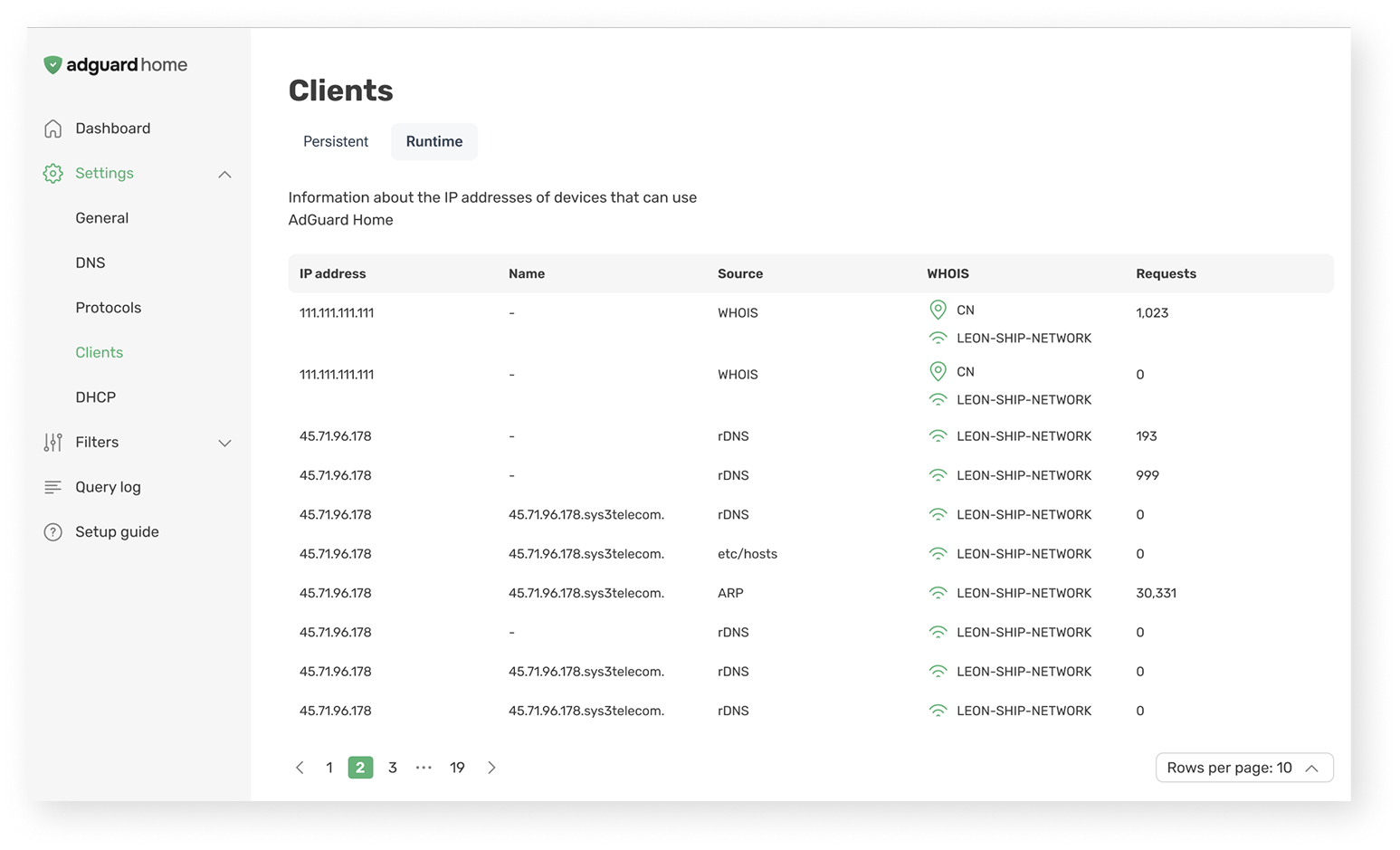
Client settings
Managing individual devices on your network is more intuitive, with a cleaner layout that helps you quickly assign profiles and specific rules.
Query log
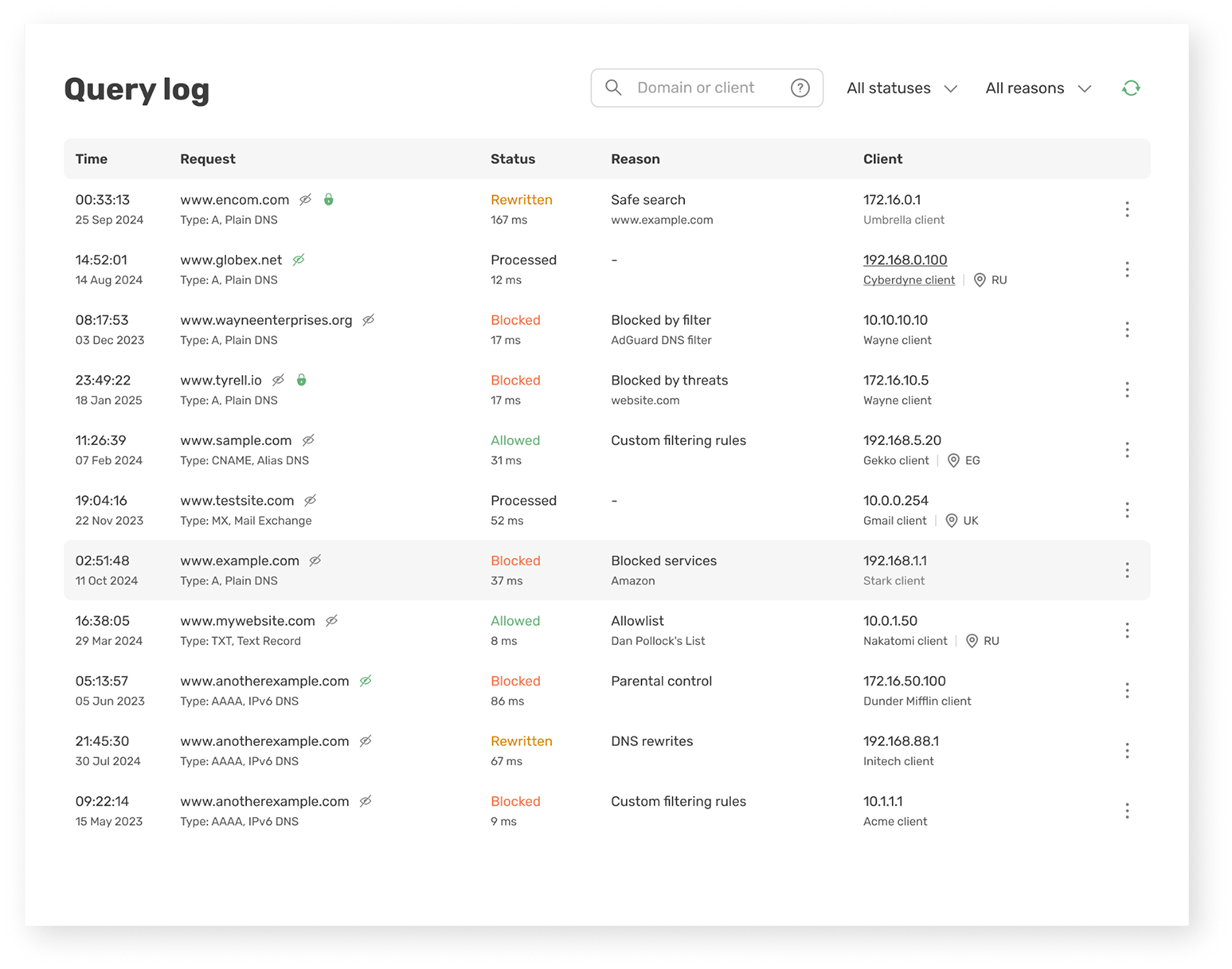
The main diagnostic tool now features expanded request data on query cards, and new sorting and filtering parameters for precise analysis.
Filters section
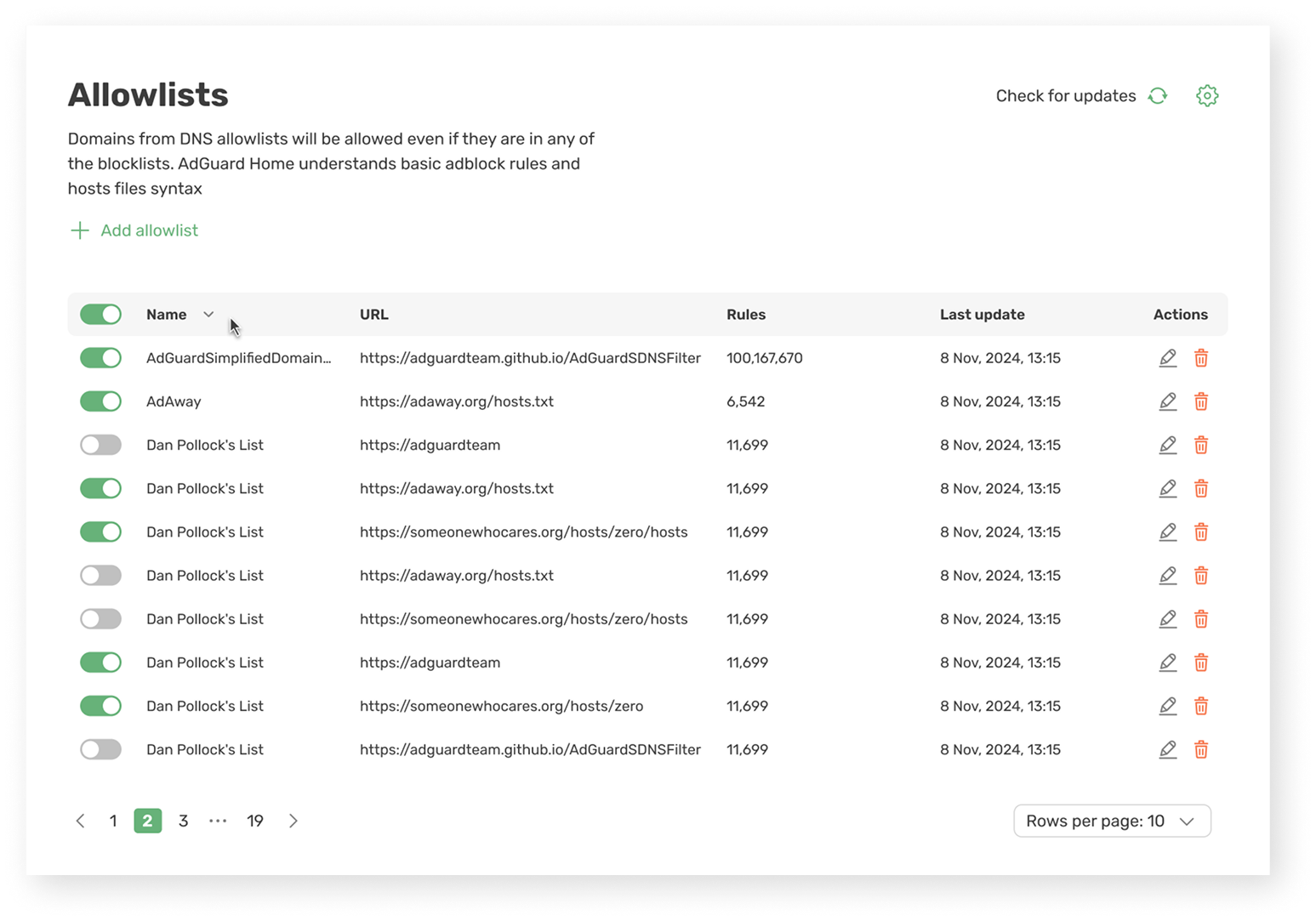
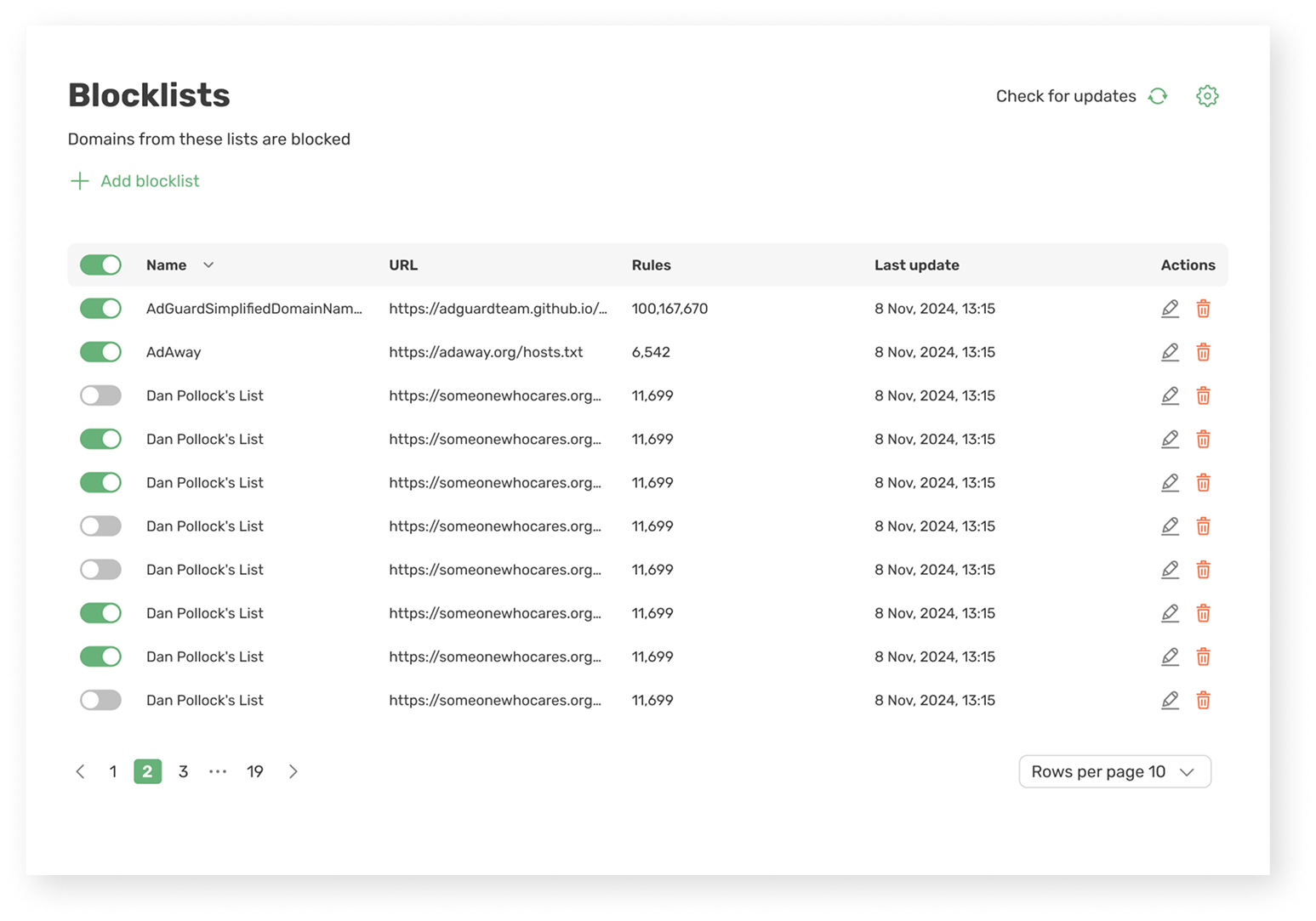
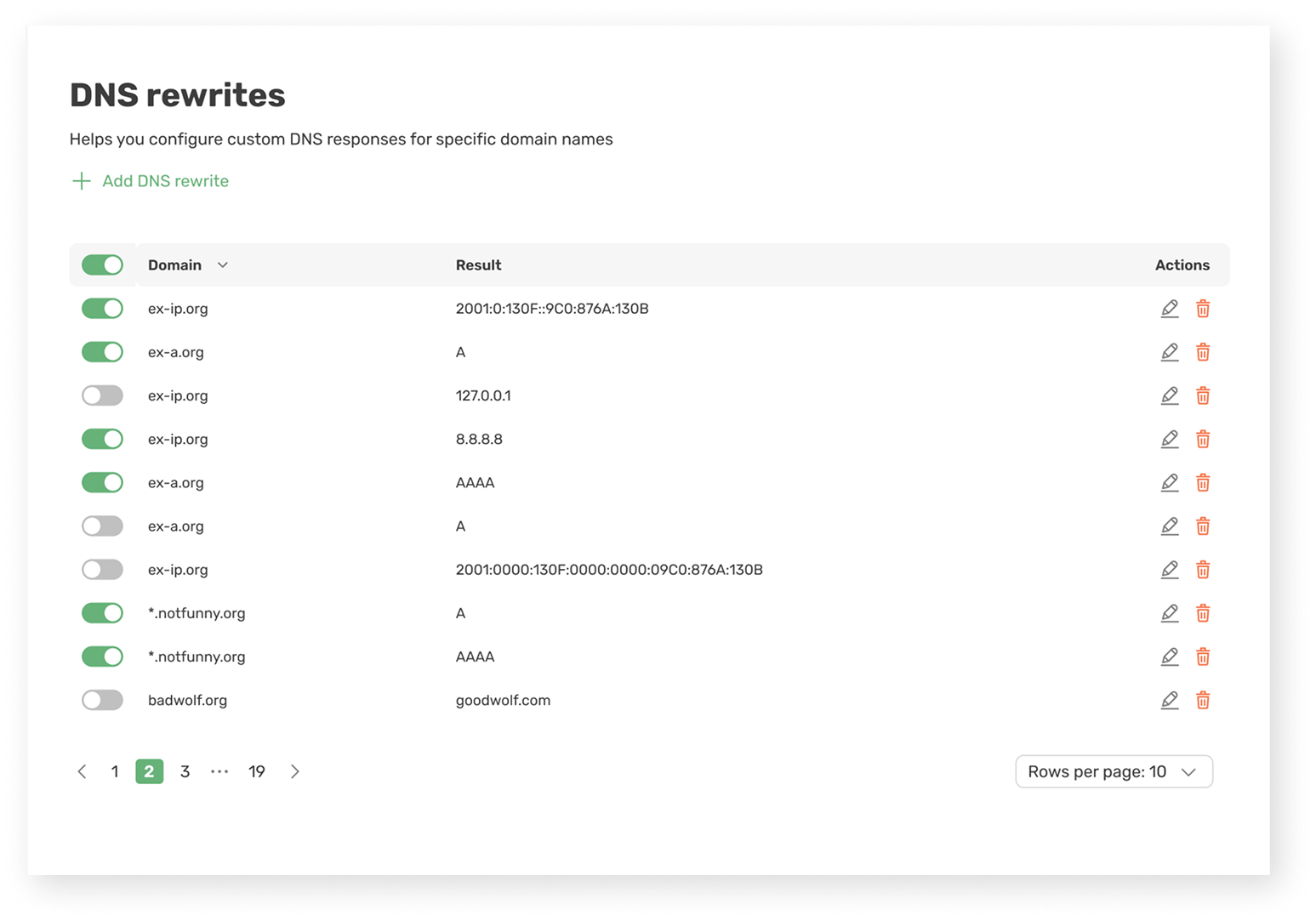
Your main instruments have been polished: Blocklists, Allowlists, DNS rewrites, and User rules. Plus, you can now configure automated update intervals for your filters.
Help us shape the final release
Because AdGuard Home runs on various hardware — from a Raspberry Pi to enterprise servers — network setups vary wildly across our community. A milestone this massive needs real-world testing across all kinds of environments, and we can’t do that without you.
How to update or switch to v1.0 beta
If you are already on the beta channel: You don’t need to do anything. The update will arrive automatically via the built-in updater.
If you are on the stable version: First, back up your settings just in case by saving your configuration file (AdGuardHome.yaml) and your data directory (data). Then, choose the method that matches your setup:
- Docker: Change your image tag from
:latestto:beta, then recreate and restart the container. - Automated script (Linux/macOS): Run the installation script with the beta flag:
curl -s -S -L https://raw.githubusercontent.com/AdguardTeam/AdGuardHome/master/scripts/install.sh | sh -s -- -c beta -v - Manual installation (Windows and others): Stop your AdGuard Home service, download the latest pre-release build from the GitHub releases page, replace the old executable file with the new one, and restart the service.
For more detailed instructions, check our repository.
Sharing your feedback
As you test the beta, please tell us what you think. What feels right? What feels clunky? Did we miss anything? If you spot a bug or have a suggestion, let us know on GitHub.
Just a quick tip: use the search bar first to check if someone else has already reported the issue. If it’s a new one, open a ticket, and we’ll dive right into it.
AdGuard Home was built for you, but it has always been shaped by you. This project evolves hand-in-hand with its community, and we wouldn’t have it any other way.
Thank you to all our long-time contributors for staying with us on this journey, and a warm welcome to everyone deploying the software for the first time. Fire up the beta, check out the new look, and let’s make something great together.